PhD Computer Engineer Transitioning into Data Science

Floranne Ellington

Focused on healthcare, applied machine learning, and real-world data problems.

I'm a PhD-trained computer engineer with experience in healthcare systems, wearable devices, and applied data science. I'm currently building a portfolio of practical machine learning projects and exploring data science opportunities, especially in healthcare and related domains.

Engineering depth with healthcare context.

Core strengths

Python SQL Scikit-learn XGBoost Time-Series Modeling Data Cleaning Visualization Healthcare Data Analysis

My background is in computer engineering and healthcare systems research, where I worked on wearable sensing, biosignal processing, and data-driven clinical applications. I'm now focused on transitioning into industry data science roles where I can apply machine learning, data analysis, and technical problem-solving to real-world problems.

Predicting 30-Day Hospital Readmissions

Performance snapshot

XGBoost achieved ROC-AUC ~0.64 with improved recall compared to the baseline model.

The model improved detection of high-risk patients while keeping the workflow grounded in clinical interpretation.

Built an end-to-end machine learning pipeline to predict 30-day hospital readmissions using structured electronic health record data. The project includes SQL-backed data access, preprocessing in Python, baseline and tree-based models, class imbalance handling, threshold tuning, and clinical interpretation of results.

Highlights

  • Developed a full workflow from data cleaning to model evaluation
  • Compared Logistic Regression and XGBoost for binary classification
  • Improved detection of high-risk patients with XGBoost
  • Identified prior inpatient visits and disease severity as major drivers of readmission risk

Tools and methods

  • Python
  • SQL
  • Scikit-learn
  • XGBoost
  • Time-series modeling
  • Data cleaning
  • Visualization
  • Healthcare data analysis

Project link

Project Repo
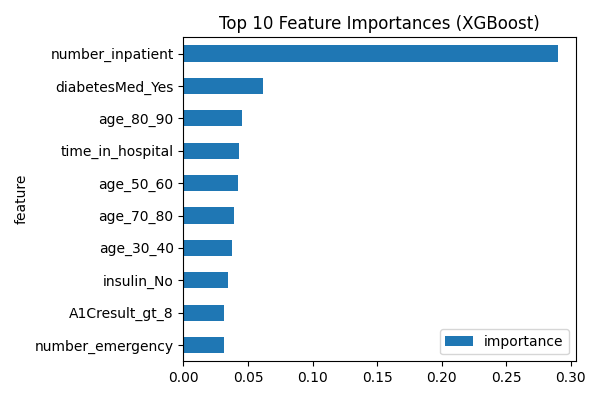
Feature importance chart showing prior inpatient visits as the strongest XGBoost predictor, followed by diabetes medication, age bands, time in hospital, insulin status, A1C result, and emergency visits.
Model insight Feature importance highlights key readmission drivers.

Prior inpatient visits and severity-related clinical variables stood out as the strongest contributors to predicted readmission risk.
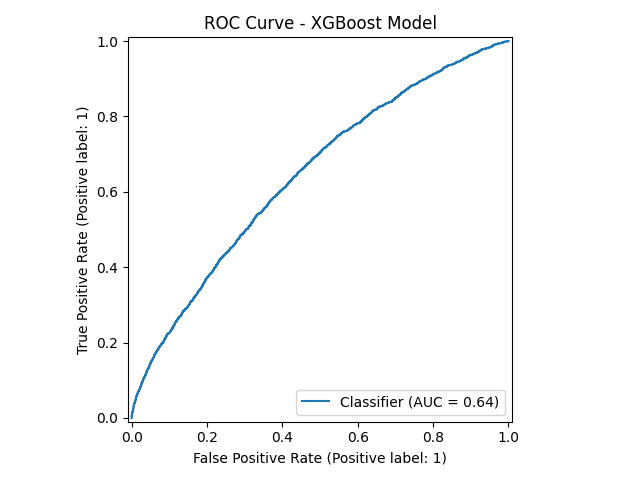
ROC curve for the XGBoost readmissions model showing classifier AUC of 0.64.
Model performance ROC curve for the XGBoost classifier.

The curve reflects meaningful lift over baseline while supporting a higher-recall screening workflow for high-risk patients.

Research, sensing, and applied machine learning.

What I bring

  • Strong analytical rigor from a PhD and research background
  • Hands-on experience with clinical and physiological data
  • Practical model-building informed by real-world constraints

My experience spans healthcare systems research, wearable sensing, biosignal analysis, and applied machine learning. I've worked on fetal and maternal monitoring systems, blood pressure estimation, and time-series forecasting projects in both research and industry settings.

Looking for meaningful data science work in healthcare and beyond.

Best fit roles

  • Healthcare-focused data science and analytics
  • Applied machine learning and forecasting
  • Data-driven product and decision support work

I'm currently seeking data science opportunities where I can contribute strong analytical skills, healthcare domain experience, and a practical machine learning mindset. I'm especially interested in roles involving healthcare, applied ML, forecasting, or data-driven product development.

I'm also continuing to build and share similar, more advanced projects over the coming weeks. Feel free to connect.